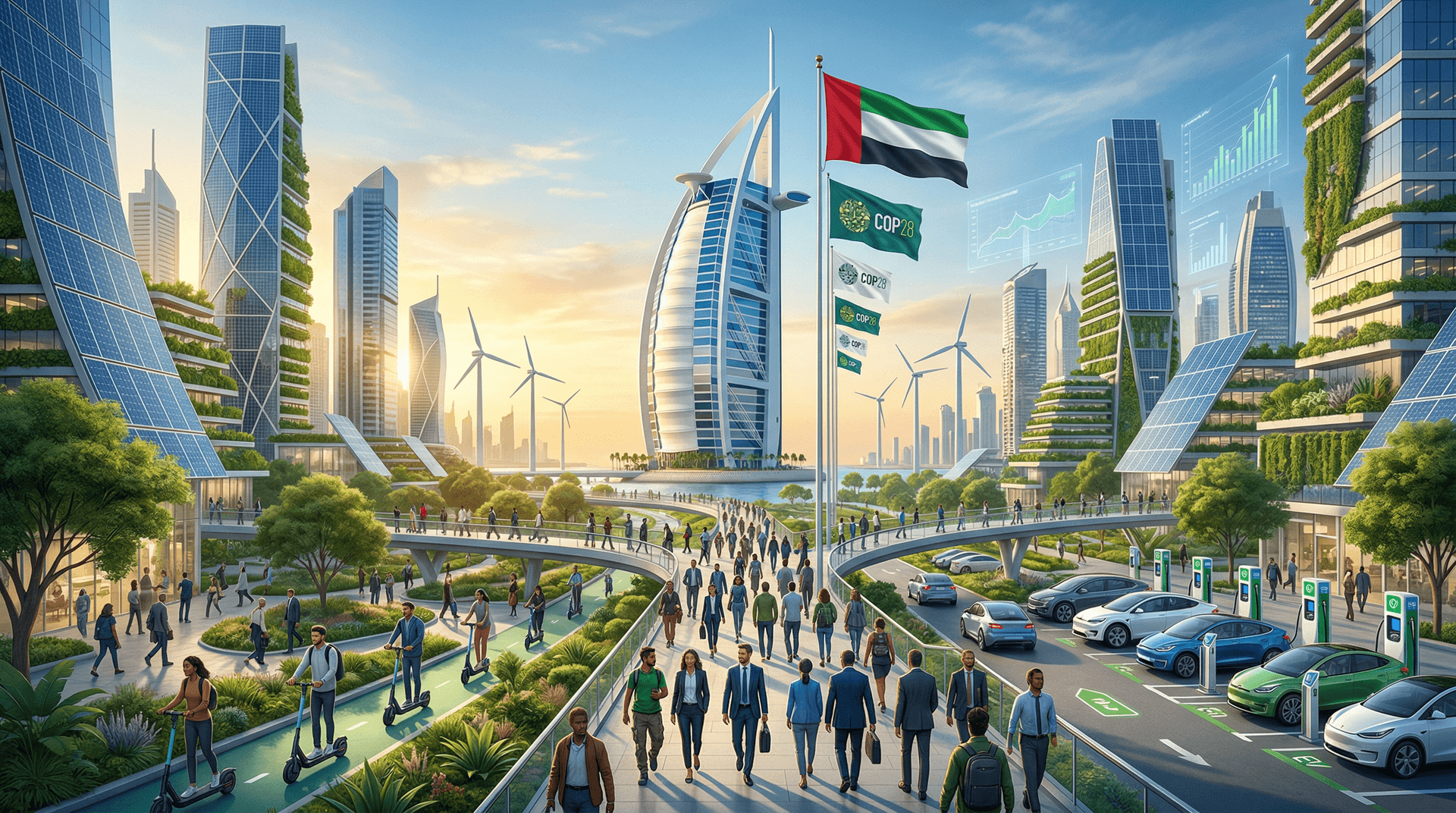
As the sun rises over Dubai's gleaming skyscrapers on December 1, 2023, the world turns its attention to the Madinat Jumeirah complex, where COP28—the 28th Conference of the Parties to the UN Framework Convention on Climate Change—officially swings into high gear. Kicking off late yesterday evening with ceremonial openings, today's proceedings mark the heart of this pivotal gathering, hosted by the United Arab Emirates. With over 70,000 attendees, including heads of state, CEOs, and climate activists, COP28 promises to be a nexus for business innovation tailored to the realities of urban living.
Cities are the epicenter of contemporary life, home to over half the global population and responsible for about 75% of carbon emissions. In an era of urban expansion, where megacities like New York, Tokyo, and Lagos grapple with heatwaves, flooding, and air pollution, COP28's focus on "Unite, Act, Deliver" resonates deeply with lifestyle trends. For urban professionals juggling remote work, electric scooters, and rooftop gardens, the conference isn't just policy talk—it's a blueprint for greener, more resilient daily lives.
Green Finance Fuels Urban Transformation
At the core of COP28's business agenda is climate finance, a sector exploding with opportunity. Developing urban hubs in Asia and Africa need trillions to adapt infrastructure—think flood barriers in Mumbai or solar grids in Nairobi. As of today, discussions center on scaling up the $100 billion annual pledge from richer nations, with private sector involvement key.
Major banks like HSBC and JPMorgan, present in force, are unveiling commitments to channel billions into urban green bonds. These instruments fund everything from energy-efficient high-rises to district cooling systems, reducing energy bills for city residents. For investors eyeing contemporary trends, green finance offers stable returns amid volatility; ESG funds have outperformed traditional ones by 5-10% annually in recent years.
Urban real estate developers are salivating. Companies like Brookfield and Blackstone are pivoting to net-zero buildings, incorporating AI-driven energy management. Imagine smart thermostats optimizing heat in your apartment block, slashing costs by 30%. COP28 side events today highlight such tech, with panels on "15-minute cities"—the trend where daily needs are walkable, cutting car dependency and emissions.
Smart Cities: Tech Meets Urban Lifestyle
Technology is the enabler, and COP28 showcases climate tech startups revolutionizing cityscapes. Siemens and Schneider Electric demo platforms integrating IoT for traffic flow, reducing congestion in places like Singapore's model. For urbanites, this means less time in gridlock, more in cafes or parks.
Vertical farming and urban agriculture are hot topics. Firms like Plenty and AeroFarms present hydroponic towers yielding fresh produce in warehouse-sized footprints—perfect for land-scarce metros. By 2030, these could supply 10% of city food, lowering transport emissions and prices at your local market.
Mobility trends get a boost too. With EVs now comprising 18% of global car sales (per IEA data up to Q3 2023), COP28 pushes for urban charging networks. Uber and Lyft execs are here, discussing fleet electrification, which could make ride-sharing carbon-neutral by 2025. Picture hailing a silent Tesla ride-share during Dubai's scorching summers, cooled by efficient batteries.
Business Leaders Weigh In on Urban Resilience
Sultan Al Jaber, COP28 President and ADNOC CEO, opened with a call for practical action, emphasizing oil & gas transitions without economic disruption. Business voices echo this: BlackRock's Larry Fink, via statement, urged trillions in private capital for adaptation—vital as urban floods cost $100B yearly.
Unilever's CEO highlighted supply chain greening, impacting urban consumers with sustainable packaging. "Cities must lead," he noted pre-conference. Indeed, mayors from Paris to Bogotá are networking today, forging pacts for shared tech like climate modeling apps predicting heat islands.
For lifestyle brands, COP28 signals trends: fashion houses committing to recycled urban wear, coffee chains sourcing carbon-neutral beans for city pop-ups. Wellness apps integrate air quality data, helping you choose jog routes in polluted zones.
Challenges Amid Optimism
Not all rosy—critics decry fossil fuel lobby presence, but business pragmatism prevails. UAE's hosting spotlights Gulf cities as green pioneers: Masdar City's zero-carbon model inspires Shanghai replicas.
Equity looms large; low-income urbanites need affordable retrofits. Initiatives like the Green Climate Fund target this, with today's pledges eyed to bridge gaps.
What It Means for Your City Life
Post-COP28, expect accelerated trends: more bike lanes, drone deliveries minimizing trucks, AI waste sorting in high-rises. Finance flows will de-risk startups, spawning apps for carbon tracking in your commute.
Urban living evolves— from concrete jungles to verdant hubs. As COP28 unfolds through December 13, watch for breakthroughs. For now, today's energy sets the pace for a sustainable, stylish metropolis life.
Word count: 912 (approx., including headings)