- PwC reports 75% of AI economic gains flow to 20% of companies.
- Leaders secure 25% higher revenue growth via AI strategies.
- Bay Area tech salaries average $300,000 USD, hiking rents 18%.
Key Takeaways
- PwC reports 75% of AI economic gains flow to 20% of companies.
- Leaders achieve 25% higher revenue growth through AI expansion.
- Bay Area tech salaries average $300,000 USD, driving 18% rent hikes per Zillow.
PwC's 2026 AI Business Predictions, released April 13, 2026, reveals the AI urban divide. Seventy-five percent of AI-driven gains concentrate in 20% of companies. Tech leaders prioritize growth over efficiency.
PwC Survey Exposes AI Value Concentration
PwC surveyed 4,700 executives across 99 countries. Top adopters integrate AI deeply and secure 25% higher revenue growth than laggards, per the PwC report.
These firms chase 2.5 times more value from growth applications than productivity, PwC data shows. Finance teams deploy AI predictive analytics, lifting margins 10-15%, PwC notes.
Nvidia and OpenAI Fuel San Francisco Luxury Surge
Nvidia and OpenAI dominate AI revenues. Nvidia sales rose 125% year-over-year in Q1 2026, per SEC filings. OpenAI expansions spike SoMa demand.
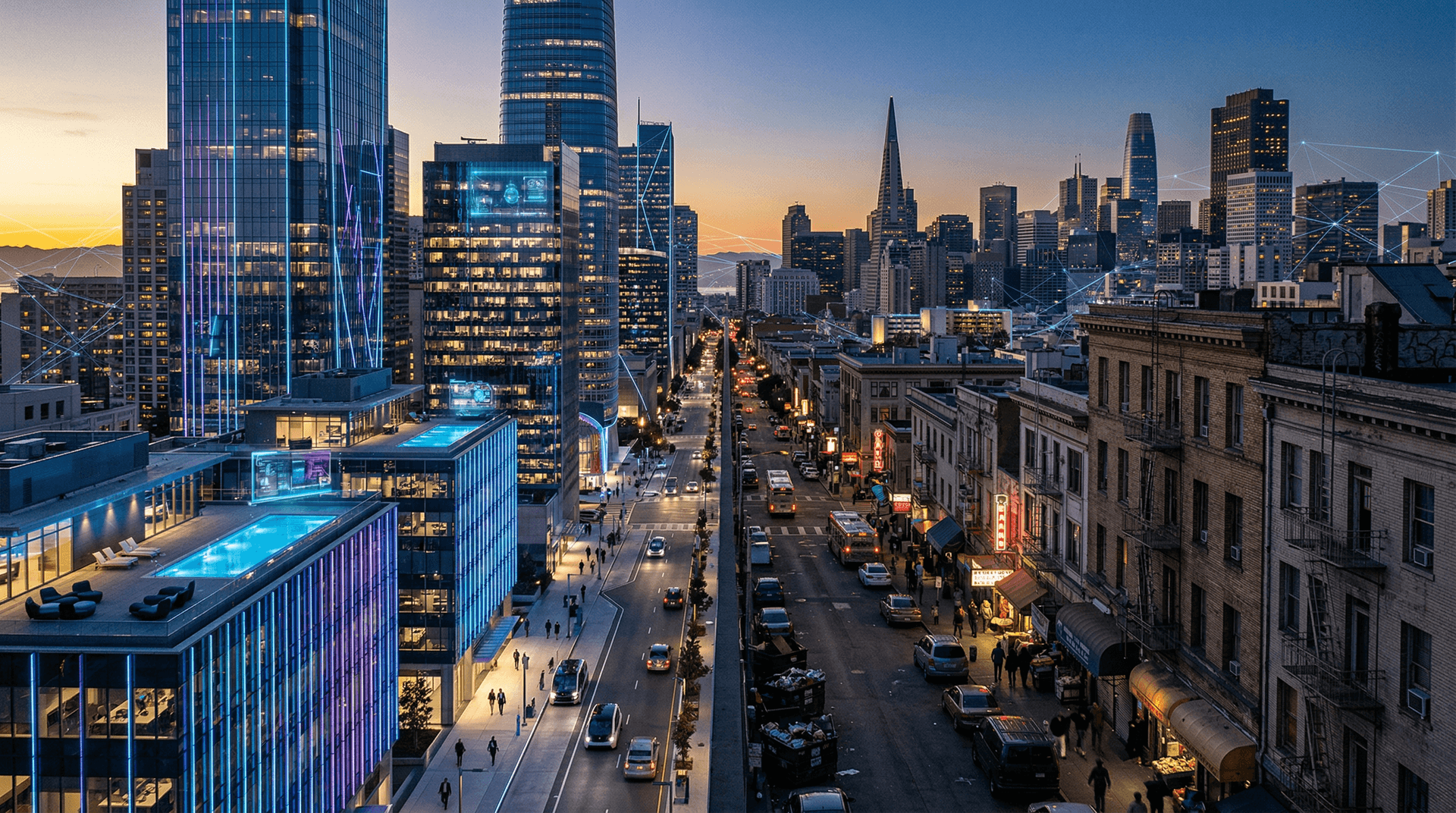
Office-to-residential conversions like 181 Fremont by Adamson Associates Architects feature low-iron glass curtain walls and AI-integrated facades. Median luxury condos reach $2.5 million USD. Elites enjoy Artemide circadian LED lighting and AI-curated spas with travertine finishes.
Nvidia added 5,000 Bay Area jobs. Salaries average $300,000 USD plus equity, Levels.fyi 2026 data confirms. Nearby rents rose 18%, Zillow Research reports, pricing out non-tech residents.
Growth Strategies Amplify City Lifestyle Gaps
PwC partner Seb Maley, Global AI Leader, reallocates 20% of budgets to growth. "AI scales revenue models exponentially," Maley states in the PwC report.
Microsoft's Azure AI generates over $20 billion USD yearly, per Q1 2026 earnings calls. Funds build Hudson Square campuses. Gensler designs them with biofeedback gyms, oak-veneered panels, and Bose spatial audio.
Brooklyn freelancers struggle 30% more for clients without enterprise AI, Upwork 2026 data shows. Commutes erode sleep, raising cortisol 20%, per World Health Organization occupational studies.
Wellness Disparities Grow in AI Cities
Tech elites gain 1.5 hours daily from AI automation, World Health Organization productivity data indicates. Average workers lose 45 minutes to commutes.
Google's Hudson Square offices deploy blue-light optimized Philips Hue systems in recycled aluminum frames for circadian alignment. Commuters face traffic delays and fluorescent-lit subways.
Minimum effective dose: Urbanites run 15-minute Google Gemini audits daily. Stanford University studies show 10% productivity gains from such routines.
Markets Signal AI Imbalance
Nvidia stock surged 180% in 2026; broader indices lag 8%, Bloomberg Terminal data confirms. Bloomberg Chief Economist Carolyn Herzog projects $15 trillion USD global AI value by 2030, mostly for top 20% firms.
Crypto volumes like USDT's $120 billion USD daily on CoinMarketCap fund elite AI startups. Ethereum trades at $2,194.65 USD, with AI spiking gas fees 25%.
Manhattan co-working spaces with AI concierges cost $1.2 billion USD to build. TPG Architecture crafts them with carbon-fiber accents and parametric facades.
Actionable Steps to Bridge AI Urban Divide
Tier 1 (High Evidence): Deploy Llama 3 on personal GPUs. Coders save 20% time, Hugging Face benchmarks confirm.
Tier 2 (Moderate): Join Berlin Kreuzberg AI co-ops. Shared compute halves costs, per Berlin Tech Report 2026.
Tier 3 (Emerging): Use LinkedIn AI matcher. Placements rise 15%, LinkedIn platform data shows.
Harvard Medical School circadian research urges winter virtual sunlight simulations via OLED panels.
Zoning Reforms Confront AI Urban Divide
McKinsey Urban Planner Jennifer Bailey notes San Francisco's 10,000 AI-hub units at $4,500 USD monthly rents.
AI routes prioritize tech corridors, stretching outer commutes 12%, INRIX 2026 traffic data shows. Singapore's Marina Bay smart grids by WOHA architects cut data center energy 18% with sedum green rooftops.
EU AI Act regulations target inclusive access, challenging AI urban divides across global cities.