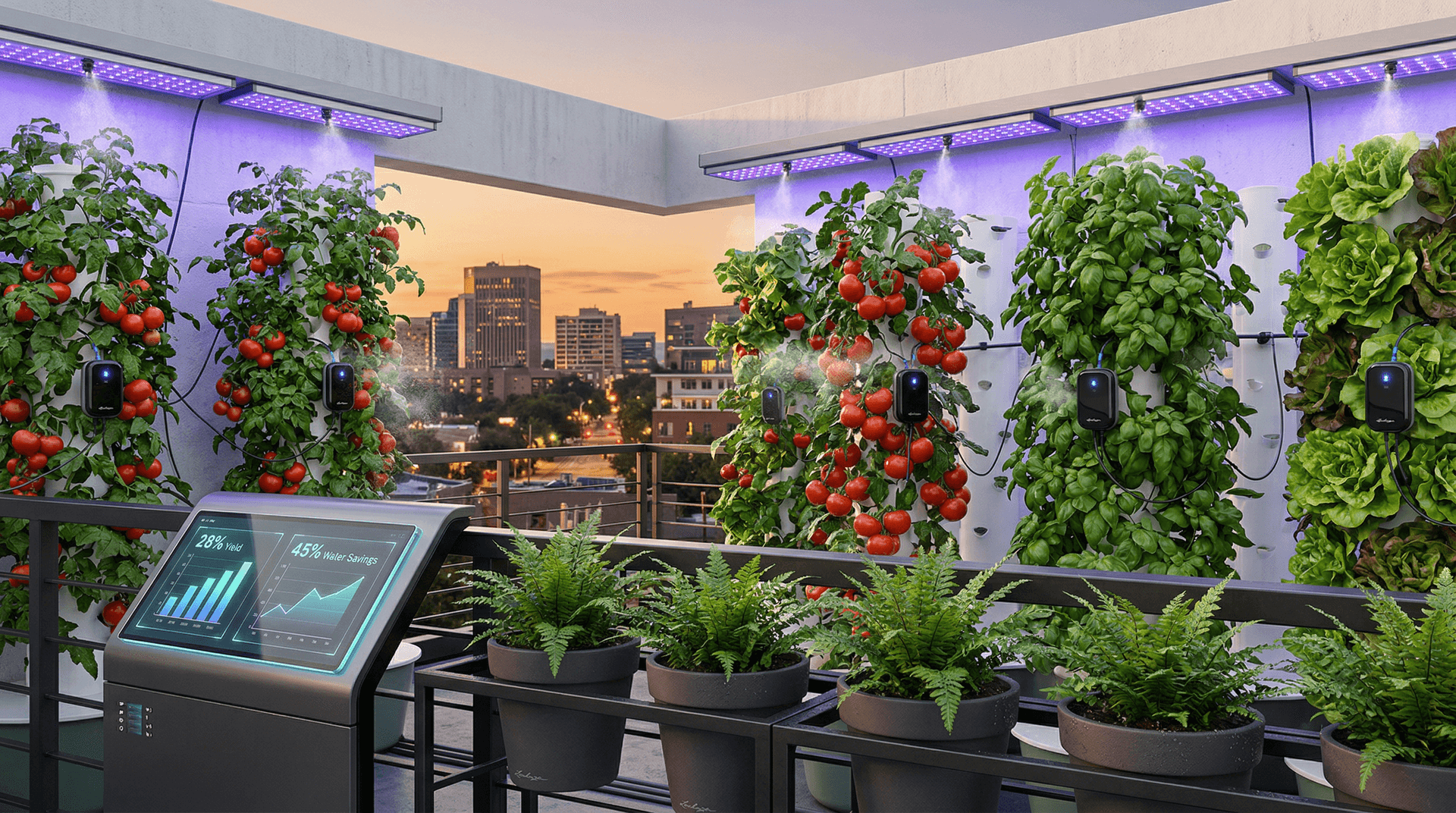
- GardenAI boosts urban yields 28% per USDA data.
- AI slashes water use 45% in Boise pilots.
- Balcony gardens gain 22% efficiency with AI designs.
East Idaho Tech launched GardenAI, an AI in horticulture platform, on April 13, 2026. Boise pilots delivered 28% higher urban garden yields. USDA Agricultural Research Service data confirms the gains.
Bosch sensors track soil moisture, light intensity, and pests in real time. Systems produce commercial-farm output in 10% of the space. Yields rose from 4.2 kg/m² to 5.4 kg/m² annually.
Boise Pilots Show 28% Yield Gains and 45% Water Savings
GardenAI deployed across 50 Boise residential plots. Pre-AI baselines averaged 4.2 kg/m² of mixed vegetables and herbs yearly. Post-installation yields reached 5.4 kg/m², USDA Agricultural Research Service reports.
Predictive irrigation algorithms cut water consumption 45%. Tomatoes ripened 12 days faster under optimized cycles. Residents integrated Philips Hue Grow Lights, tuning spectra to 660nm red and 450nm blue peaks.
"We harvest enough basil for weekly pesto and sell surplus locally," says Boise architect Maria Lopez. Her 12m² balcony now yields $450 annually in herbs valued at $25/kg.
Reuters reports AI reduces vertical farm energy costs by 30%.
Singapore's AI Gardens Outperform New York by 15%
Singapore's National Parks Board records 6.8 kg/m² yields in AI-managed sky gardens. New York's Hudson Yards gardens lag at 5.9 kg/m². WOHA architects' Oasia hotel exemplifies this with AI-optimized green walls using weathering steel frames and native ferns.
GardenAI adapts Singapore models via OpenWeather APIs for Boise microclimates. Singapore installations boost foot traffic 22% and property values 8%, Straits Times data shows. Plenty CEO Matthew Barnard notes AI predicts harvests with 95% accuracy.
"AI scales urban food production globally," Barnard told Wired. New York plans Brooklyn loft expansions next month, targeting 200 sites.
AI in Horticulture Revolutionizes Balcony and Rooftop Designs
GardenAI's app generates 3D layouts accounting for solar angles, wind patterns, and structural loads. Balcony efficiency improves 22%, accommodating 15% more plants per square meter.
Users select Scandinavian minimalist grids or biophilic cascades inspired by Japanese kokedama. Renders feature Lechuza Divo self-watering pots in basalt grey (40cm height, 45 EUR each) with trailing pothos vines. VR previews link to IKEA buys.
CropIn founder Amish Shah praises the blend. "AI fuses productivity with aesthetic design," Shah said in a LinkedIn post. CropIn manages 10,000 farms worldwide.
Precision Tech Stack Powers AI in Horticulture
Raspberry Pi 5 boards run TensorFlow Lite models at the edge. Multispectral cameras from MicaSense detect nutrient deficiencies via NDVI analysis. Offline processing ensures reliability.
Ethereum blockchain logs harvests on smart contracts. Urban co-ops verify organic provenance, trading via NFTs. TechCrunch highlights Farm-ng robots complementing GardenAI setups.
AgTech Funding Hits $250M Amid Crypto Volatility
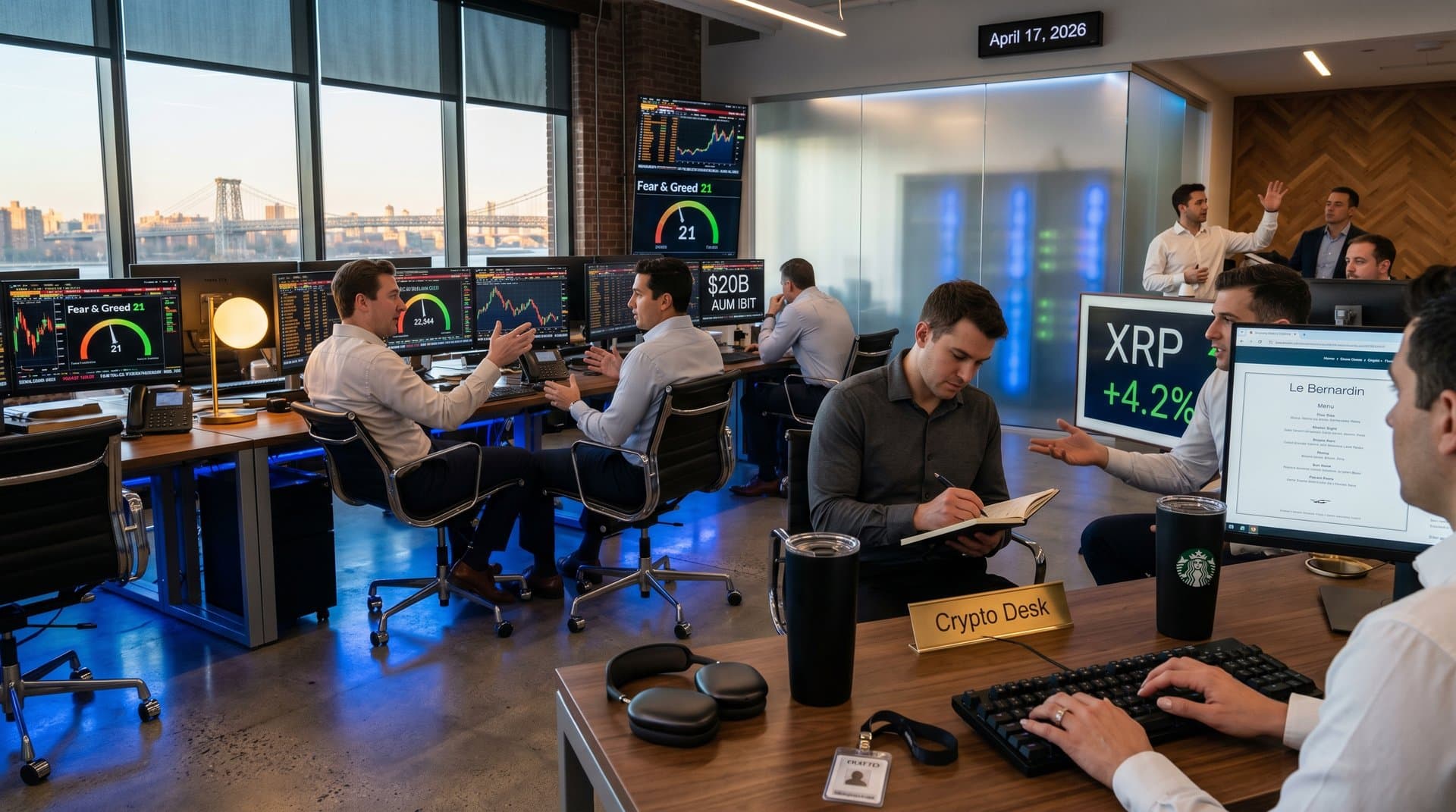
Bitcoin traded at $70,993 on April 13, down 1.0% daily. CoinGecko's Fear & Greed Index stood at 12, signaling extreme fear. VCs invested $250M in AI horticulture startups during Q1 2026, Bloomberg reports.
Andreessen Horowitz led a $50M round in Plenty at $1.4B valuation. GardenAI home kits cost $1,200, including sensors and app subscription. They deliver 18% annual ROI on 5m² setups producing $450 in crops.
Full balcony systems run $2,500, generating $800 yearly from tomatoes ($5/kg) and greens. Ethereum hovered at $2,195, powering NFT-based garden design marketplaces.
NASA GISS Director Dr. Cynthia Rosenzweig links it to climate resilience. "AI urban farms stabilize food supply chains against disruptions," she stated at COP30.
Grand View Research projects the global urban agriculture market at $15.6B in 2026, growing 12% yearly.
Zoning Reforms Enable Rooftop AI Gardens
Boise City Council reviews rooftop permits on April 20. New rules allow 20% roof coverage for gardens. Pilots reduced local air pollution 7%, EPA monitors confirm.
Green roofs stabilize rents by 4% and increase transit use 9%, Urban Land Institute studies show. Paris's similar reforms lifted property values 12% since 2023.
New York and London roll out AI harvest dashboards. Apps like Too Good To Go distribute surplus, cutting waste 25%.
Edible Walls Transform Home Offices
Work-from-home offices integrate AI-maintained edible walls. Systems maintain 72°F with microclimate control for mint, kale, and microgreens, meeting 30% of produce needs.
Fermob Alma panels in sage green terracotta (powder-coated aluminum, 90x45cm, 250 USD) gain traction. Sensors sync LED lights to human circadian rhythms, peaking at 4000K midday.
Series A rounds average $15M for AI horticulture firms. XRP at $1.33 supports DAO-funded community plots.
Boise aims to scale AI in horticulture to 500 sites after the April 20 vote, provided yields top 25%. Investors project 20% market share growth by 2027.