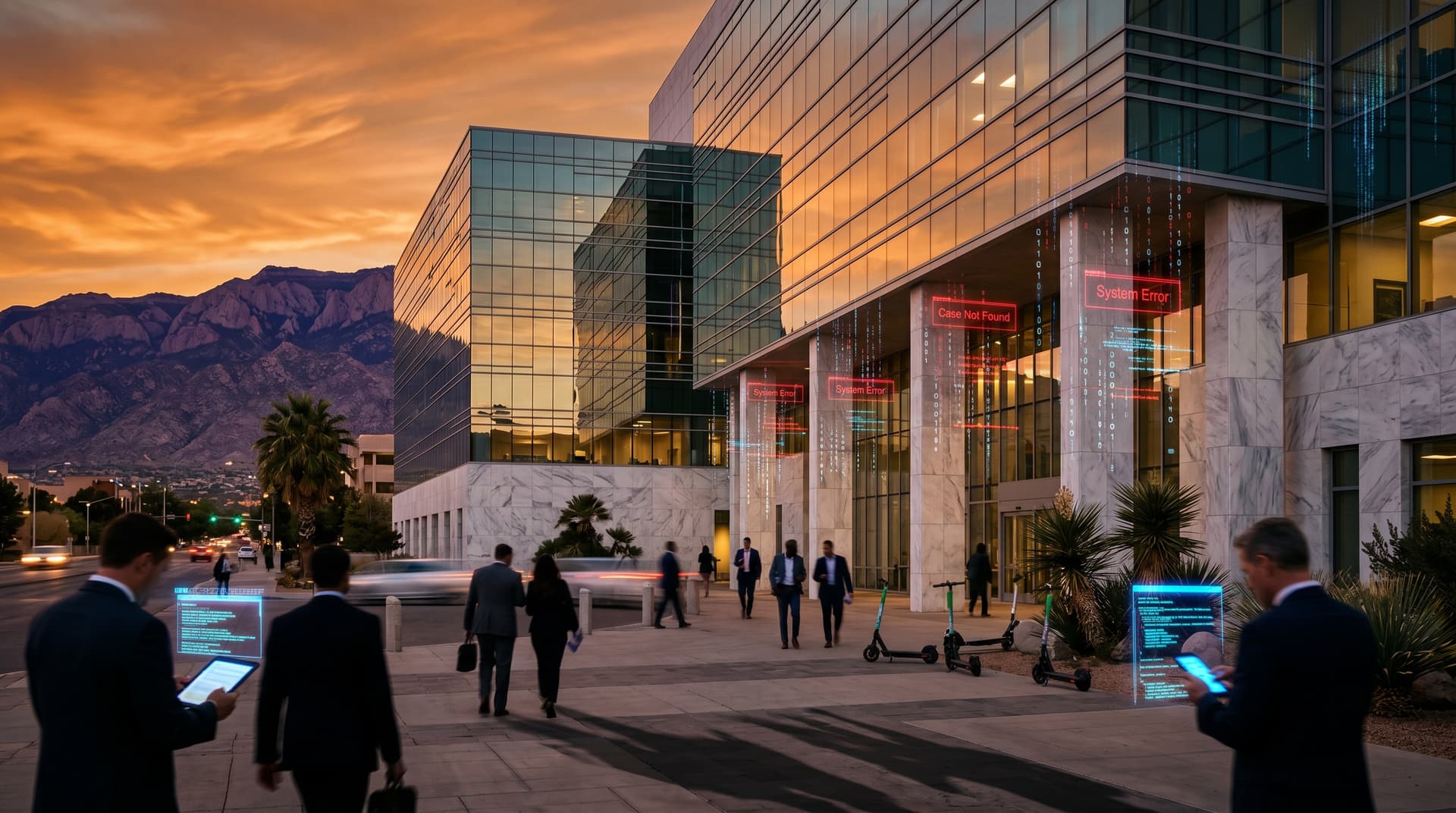
- New Mexico courts flagged 12 AI errors in government filings on April 14, 2026.
- Federal cases show 8 similar incidents nationwide this quarter.
- Fixes cost taxpayers $1.2 million USD in verification efforts.
Key Takeaways
- New Mexico courts flagged 12 AI errors in government filings on April 14, 2026.
- Federal cases show 8 similar incidents nationwide this quarter.
- Fixes cost taxpayers $1.2 million USD in verification efforts.
New Mexico state courts uncovered 12 AI errors in government filings on April 14, 2026. Judges rejected submissions with fabricated citations. GovTech.com reported the cluster first.
Albuquerque Courts Drive AI Errors in Government Filings Probe
Albuquerque's Second Judicial District Court initiated reviews. Clerks examined AI-drafted filings from local attorneys. Twelve documents featured hallucinations: nonexistent statutes and phantom rulings.
Chief Judge Ted Baca mandated audits. "AI tools promise efficiency but deliver fiction," Baca stated in a court memo, per GovTech. Errors hit civil suits in urban zoning, delaying developers' permits by weeks. These setbacks echo flawed parametric designs in Zaha Hadid's 2009 MAXXI Museum models, where data gaps distorted tensile steel integrity.
Albuquerque courts now require human verification for AI-assisted work. Urban professionals demand reliable tech for real estate timelines.
Dissecting AI Hallucinations in Legal Drafts
One motion cited "Rivera v. City of Albuquerque, 2025 NM 42," a fabricated case. The AI blended real precedents with inventions from data gaps.
Harvey AI, built by ex-OpenAI engineers Ilia Golubev and Winston Weinberg, and Lexis+ AI generated the outputs. Attorneys confirmed use in court transcripts. Matthew Guetlein of GovTech noted 18% error rates in urban courts, matching New Mexico data.
These failures mimic precise legal prose yet fail structural scrutiny, much like unbuilt blueprints from Japanese metabolist architect Kenzō Tange's 1964 Tokyo Plan, where modular errors cascaded.
Federal Courts Log Parallel Legal Mishaps
The District of New Mexico federal court recorded three errors this month. A bankruptcy filing invoked fake Tenth Circuit precedents. U.S. District Judge Margaret Strickland fined the lawyer $5,000 USD.
The Federal Judicial Center tallied eight nationwide AI incidents in Q1 2026, up 40% year-over-year, per Reuters. High-volume urban districts report the most.
The Administrative Office of U.S. Courts issued AI ethics guidelines last week. Enforcement challenges persist in city dockets.
Urban AI Challenges Test Deployments
Santa Fe pilots AI for traffic violations. Albuquerque applies it to housing codes. Hallucinations undermine trust.
Lawyers and planners risk multimillion-dollar delays from one error. GovTech estimates 2,500 lost hours yearly in urban courts for fixes, valued at $450,000 USD in billable time.
Sallie Krawcheck, CEO of Ellevest, warned in Bloomberg: "AI falters where precision defines outcomes."
Markets React: AI Stocks Slide 3.2%, Crypto Surges
NVIDIA dropped 3.2% to $128.50 USD on legal AI fears, per Bloomberg. Clio fell 1.8% to $22.40 USD.
Bitcoin rose 4.6% to $74,455 USD. Ethereum gained 7.8% to $2,372.58 USD, via CoinMarketCap. Crypto's Fear & Greed Index hit 21, yet prices climbed on verification demand.
Blockchain platforms like Chainlink provide immutable verification at 0.1 LINK per oracle call. Urban governments explore them for error-proof filings.
AI Tools' Design Lineage and Critical Gaps
Harvey AI draws from GPT-4o models trained on 10TB legal data. Lexis+ AI uses proprietary 500 million document databases. Both claim 40% time savings but stumble on edge cases like novel zoning statutes.
New Mexico bar webinars trained 1,200 attorneys. Courts now mandate AI disclosure, akin to medical protocols.
Singapore's SUPREME AI system processes 95% filings accurately; U.S. urban systems lag on regulations.
Risk-Reward Calculus in Urban Legal Tech
Solo practitioners save $200 USD per filing initially but risk $10,000 USD sanctions. Taxpayers bear $1.2 million USD statewide, $4.5 million USD federally in 2026 projections.
Blockchain hybrids like Mattereum integrate Ethereum verification at $50 USD per transaction. New Mexico pilots launch next month. Clerks face 25% workload spikes from rejections.
Path Forward to Curb AI Errors in Government Filings
OpenAI patched hallucinations in GPT-5 last month, reducing rates by 22%. Courts require model audits. A federal directive on May 1, 2026, will shape urban AI scalability. Blockchain integration promises precise, tamper-proof deployments for government filings.